
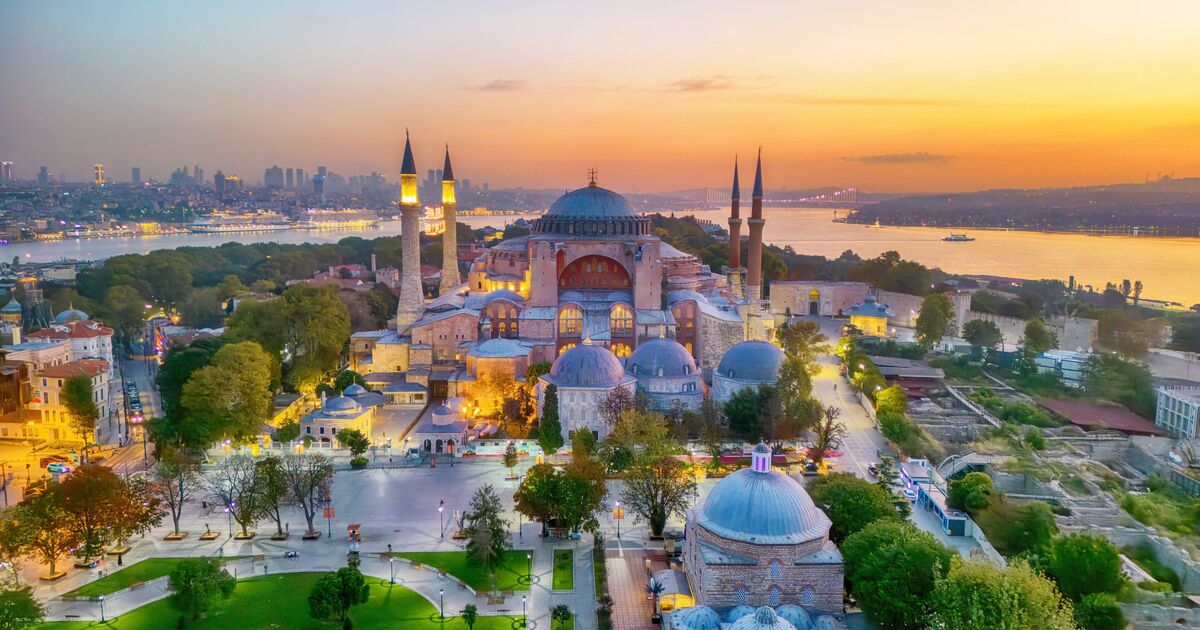

Hagia Sophia and the Sultanahmet Square in Istanbul, Turkey (Image: alxpin via Getty Images)
Turkey remains a favoured destination for British holidaymakers, with thousands travelling to the country annually. Anyone planning a trip there this year is urged to familiarise themselves with all current travel guidance and any warnings in effect.
The UK Foreign, Commonwealth and Development Office (FCDO) maintains extensive information on its website, covering destinations across the world. It serves as an essential resource for those with holidays booked or considering travel abroad.
For those heading to Turkey, there are several important matters to note. We have outlined the key travel warnings and guidance below. Further details can be accessed here. This follows ChronicleLive’s recent summary of eight travel warnings for UK tourists holidaying this summer.
The Foreign Office states: “If you choose to travel, research your destinations and get appropriate travel insurance. Insurance should cover your itinerary, planned activities and expenses in an emergency.” It also cautions: “Your travel insurance could be invalidated if you travel against advice from the Foreign, Commonwealth and Development Office (FCDO).”
Warning over Turkey-Syria border The FCDO advises against all travel to within 10km of the Syrian border owing to ongoing fighting and an elevated risk of terrorism. The FCDO says: “Fighting in Syria continues in areas close to the Turkish border and there is a heightened risk of terrorism in the region. Due to the ongoing conflict in Syria, roads in Hatay Province leading towards the border may be closed at short notice,” reports Chronicle Live.

Anyone planning to go to Turkey is being urged to brush up on passport rules (Image: Ferdi Uzun/Anadolu via Getty Images)
Entry requirements
To enter Turkey, your passport must carry an ‘expiry date’ of at least 150 days beyond your arrival date, along with at least one blank page. If crossing via a land border, ensure that officials stamp and date your passport at the border crossing.
The FCDO says: “Check with your travel provider that your passport and other travel documents meet requirements. Renew your passport if you need to. You will be denied entry if you do not have a valid travel document or try to use a passport that has been reported lost or stolen.” British nationals may visit Turkey without a visa for up to 90 days within any 180-day period, for either business or tourism purposes.
Political situation
The Foreign Office states: “Regular demonstrations and protests are currently taking place in Istanbul and other cities across Turkey. Demonstrations may become violent. The police response has included use of tear gas and water cannons.
“Events in Israel and Palestine have led to heightened tensions in the region and in locations across Turkey. Demonstrations continue to occur outside diplomatic missions connected to the conflict in major cities, particularly Israeli diplomatic missions in Ankara and Istanbul. Avoid all demonstrations and leave the area if one develops. Local transport routes may be disrupted.”
Drink and food spiking
The FCDO warns: “Be wary of strangers approaching you to change money, or to take you to a restaurant or nightclub. If strangers offer you food and drink these could be spiked. Buy your own drinks and always keep sight of them.”

Sun loungers by a Turkish beach (Image: Getty)
Methanol poisoning
Travellers are being alerted that there have been previous instances of severe illness resulting from alcoholic beverages containing methanol in well-known holiday destinations worldwide. The FCDO says: “In Turkey, including Ankara and Istanbul, people have died or suffered serious illness after drinking illegally produced local spirits and counterfeit bottles of branded alcohol.
“Even small amounts of methanol can kill. It is not possible to identify methanol in alcoholic drinks by taste or smell. See Travel Aware Drink Spiking and methanol poisoning for information about how to reduce the risks. Seek urgent medical attention if you or someone you are travelling with show the signs of methanol poisoning after drinking.”
Taxis The website says: “Accepting lifts from drivers of unofficial taxis is highly risky. Find a registered taxi, note the registration number before entering and ensure the fare is metered. App-based taxis and pre-booked taxis are also widely available.”
Carry your ID
It is a legal requirement to carry some form of photographic ID in Turkey at all times. Always have your passport or residence permit on your person. In busier areas, particularly Istanbul, authorities may conduct ID checks on members of the public. Numerous police checkpoints are also stationed along major roads throughout Turkey. Always cooperate fully with officials carrying out such checks.

The majestic Sultan Ahmed Blue Mosque in Istanbul (Image: Getty)
Visitors are also given guidance regarding appropriate attire. The FCDO advises people to “dress modestly if you’re visiting a mosque or a religious shrine to avoid causing offence”.
The Foreign Office warns: “Most towns and cities have stray dogs. Packs congregate in parks and wastelands and can be aggressive. Take care and do not approach stray dogs. If you’re bitten, get medical advice immediately. Rabies and other animal borne diseases are present in Turkey.”
Rules over sale of antiquities
The purchase or exportation of antiquities is strictly prohibited. Offenders could face a hefty fine and a custodial sentence of between 5 to 12 years. Certain historical artefacts found at local markets and antique shops may be sold within Turkey but cannot legally be taken out of the country. Always verify the status of any antique items prior to purchasing them.